
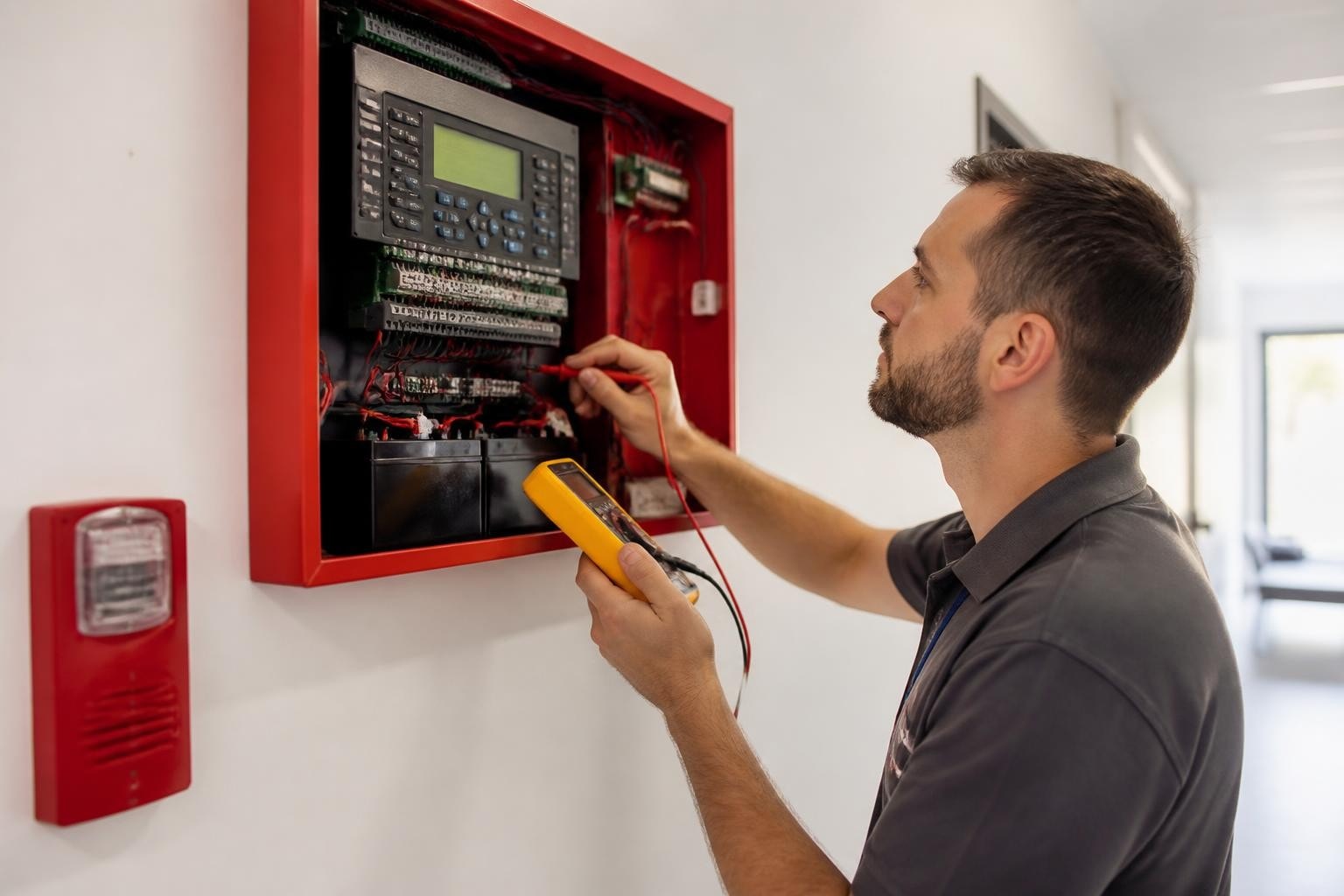
Fire detection systems represent the first line of defence in building safety, yet their effectiveness depends entirely on proper maintenance. A fire alarm that fails during an emergency poses catastrophic risks to life and property. Regular fire alarm servicing transforms passive technology into active protection, ensuring every detector, sounder, and control panel functions precisely when required. For property managers, landlords, and duty holders, servicing schedules are not merely administrative tasks but legal obligations underpinning the entire fire safety strategy.
The Regulatory Framework for Fire Alarm Servicing
The Regulatory Reform (Fire Safety) Order 2005 establishes the foundation for fire alarm servicing obligations across England and Wales. This legislation designates a responsible person who must ensure fire safety measures, including detection and warning systems, remain operational and fit for purpose. Servicing falls squarely within this duty.
BS 5839-1:2017 provides the technical standard for fire detection and alarm systems in non-domestic premises. This British Standard specifies servicing intervals, inspection procedures, and documentation requirements that form the benchmark for compliance. Fire alarm servicing under BS 5839 encompasses routine inspection, functional testing, and corrective maintenance delivered by competent technicians.
Category-Specific Requirements
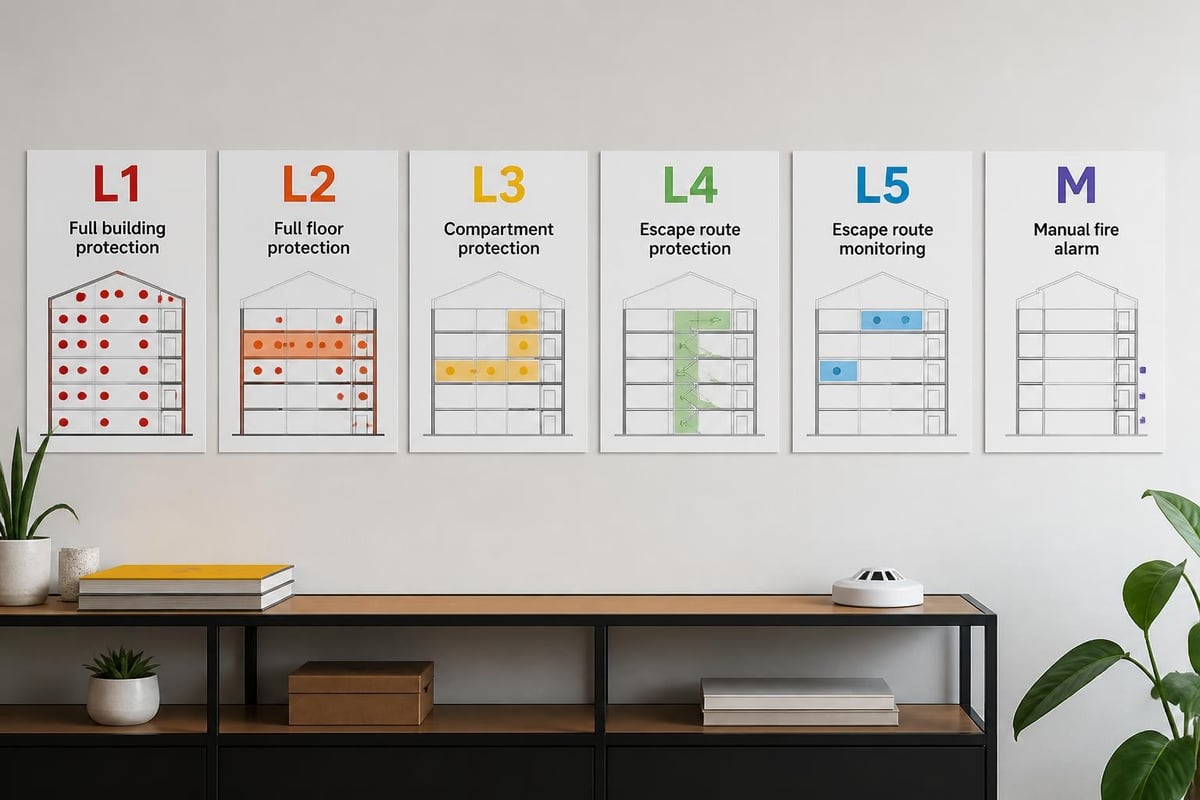
Fire alarm systems are classified into categories L1 through L5 and M, each serving different purposes:
| Category | Coverage | Typical Application |
|---|---|---|
| L1 | Maximum coverage throughout building | High-risk premises, sleeping accommodation |
| L2 | Coverage of defined areas plus escape routes | Offices, retail with specific risk zones |
| L3 | Coverage of escape routes only | Smaller commercial premises |
| L4 | Coverage in rooms opening onto escape routes | Limited-occupancy buildings |
| L5 | Localised coverage to specific risk | Plant rooms, kitchens |
| M | Manual call points only | Simple premises with constant supervision |
Each category demands tailored servicing approaches reflecting system complexity and risk profile. Understanding these distinctions ensures servicing specifications align with the system's design intent and regulatory expectations.
Weekly and Monthly Servicing Tasks
Fire alarm servicing operates across multiple timescales, with certain checks required weekly and others monthly. These frequent inspections identify deterioration before it compromises system integrity.
Weekly checks focus on system availability and basic functionality:
- Visual inspection of control panel for fault indications
- Verification that panel displays normal operating status
- Confirmation of mains power supply and battery charger operation
- Log book review for outstanding faults or maintenance actions
These tasks typically take 10-15 minutes and should be undertaken by a designated competent person within the organisation. Documentation in the site log book provides an audit trail demonstrating ongoing diligence.
Monthly tasks extend to operational testing:
- Activation of one call point or detector (rotating through zones)
- Verification of sounder operation throughout the building
- Checking of alarm transmission to monitoring stations (if applicable)
- Battery voltage measurement and recording
- Visual inspection of accessible detectors for contamination or damage
Monthly testing ensures every zone receives functional verification at least once quarterly while distributing wear across call points. This rotation prevents over-reliance on any single device for routine testing.
Documentation Standards
Every test, inspection, and corrective action must be recorded in the fire alarm log book. This document serves as the primary evidence of compliance during inspections by fire safety officers or auditors. Entries should include:
- Date and time of test
- Identity of person conducting work
- Devices tested (zone numbers, device locations)
- Results and any abnormalities
- Remedial actions taken or scheduled
The log book transforms servicing from a procedural task into demonstrable compliance. Missing or incomplete records undermine the entire fire safety case, regardless of actual system condition.
Quarterly and Annual Servicing Programmes
While weekly and monthly checks maintain baseline oversight, quarterly and annual servicing delivers comprehensive system evaluation. These intervals align with NFPA 72 standards recognised internationally for fire alarm system maintenance.
Quarterly Servicing Elements
Every three months, servicing should incorporate:
- Full visual inspection of all accessible detectors, call points, and sounders
- Testing of alarm panel auxiliary functions (fault outputs, isolation facilities)
- Inspection of cable routes for mechanical damage or deterioration
- Verification of alarm signal duration and volume levels
- Review of system modifications or building alterations affecting coverage
Quarterly servicing identifies environmental factors affecting equipment performance. Dust accumulation in detectors, paint overspray on devices, or structural changes creating detection blind spots require professional assessment and remediation.
Annual Comprehensive Servicing
The annual service represents the most thorough evaluation cycle. Conducted by qualified fire alarm engineers, this inspection verifies compliance with the original system specification and current British Standards. Fire alarm servicing at this level includes:
| Component | Annual Test Procedure |
|---|---|
| Control Panel | Full functional test, firmware verification, battery load test |
| Detectors | Sensitivity testing using smoke/heat simulators, contamination check |
| Sounders | Sound level measurement (minimum 65dB(A) or 5dB above ambient) |
| Call Points | Operational test, glass element replacement if required |
| Interfaces | Test of ancillary connections (door releases, extract fans, fire suppression) |
| Power Supply | Mains supply verification, standby battery duration test |
Annual servicing also encompasses a critical examination of system design against current building use. Occupancy changes, layout modifications, or new fire risks may render the existing detection strategy inadequate, triggering recommendations for system upgrades.
Technician Competence and Certification Schemes
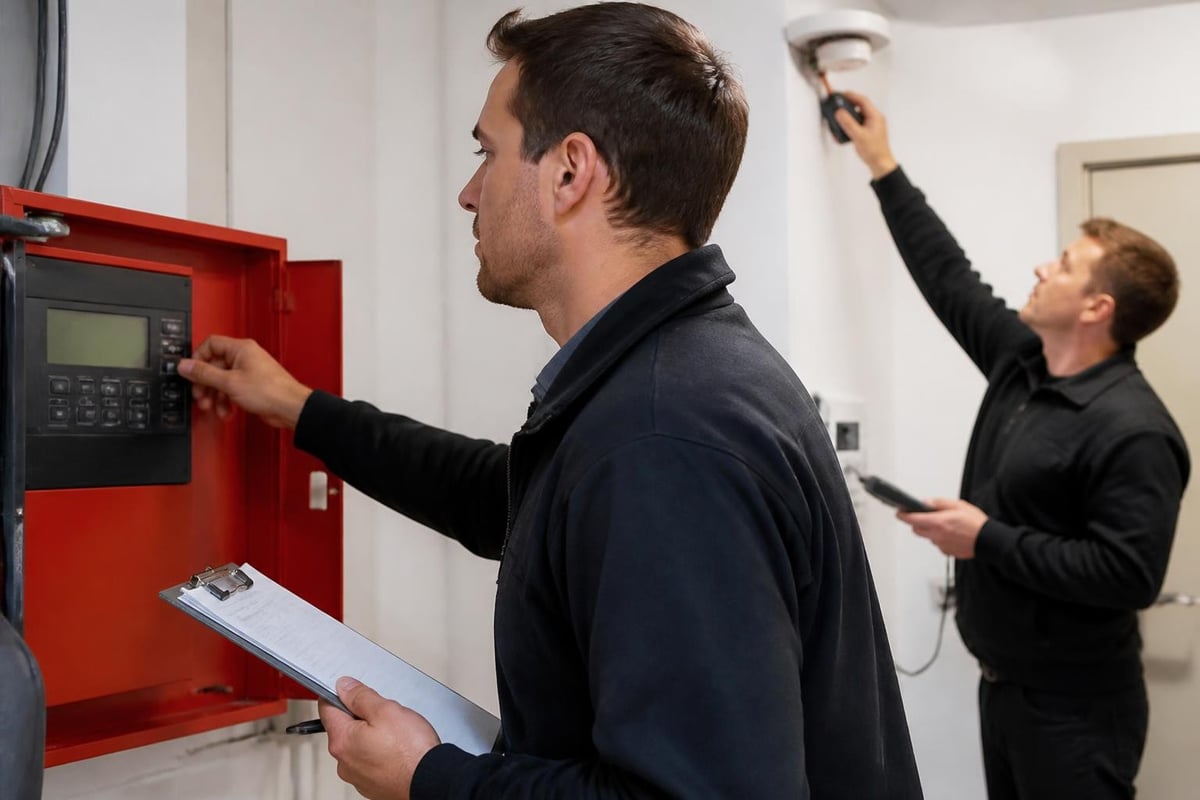
Fire alarm servicing quality depends fundamentally on technician competence. Unlike basic user checks, comprehensive servicing requires specialist knowledge of detection technology, alarm protocols, and electrical safety. Proper maintenance programmes emphasise certified personnel operating within recognised quality frameworks.
Industry Certification Pathways
Several schemes provide competence assurance:
- BAFE SP203-1: Installer and maintainer scheme for fire detection and alarm systems
- NSI NACOSS Gold: National Security Inspectorate certification for fire system providers
- FIA competent person scheme: Fire Industry Association training and assessment programme
- ECS (Electrotechnical Certification Scheme): Skills cards for electrical competence
These certifications require technical training, practical assessment, and ongoing professional development. Duty holders should verify service providers hold relevant accreditation before engaging their services.
Beyond individual competence, organisational certification demonstrates systems-level quality management. BAFE-registered companies operate under third-party audit, ensuring consistent service delivery across all contracts. This external oversight provides additional assurance beyond individual technician qualifications.
In-House Competence Development
Organisations with multiple sites or complex estates may develop internal fire alarm servicing capability for routine tasks. This approach offers advantages in responsiveness and cost control but demands investment in training and equipment.
Internal teams require:
- Formal training to BS 5839 standards
- Calibrated test equipment (smoke testers, sound meters, battery analysers)
- Access to system manuals and original commissioning documentation
- Defined escalation procedures for faults beyond in-house capability
- Regular competence reviews and external audits
Even with internal capability, annual comprehensive servicing should typically involve external specialists bringing independent perspective and specialist diagnostic tools.
Common Faults and Preventive Strategies
Fire alarm servicing identifies recurring issues that compromise system reliability. Understanding these failure patterns enables proactive maintenance strategies extending equipment life and reducing emergency callouts.
Battery-related failures represent the most common service issue. Standby batteries deteriorate over 3-5 years, reducing available backup time below the required 24-72 hours. Regular load testing during annual servicing predicts battery replacement needs before catastrophic failure.
Detector contamination affects system sensitivity and false alarm rates. Dust, insects, and airborne particles gradually accumulate in optical chambers, either desensitising detectors or triggering spurious alarms. Scheduled cleaning during servicing prevents performance drift.
Cable and connection degradation occurs through building movement, temperature cycles, and moisture ingress. Loose terminals increase circuit resistance, potentially preventing alarm signals reaching the panel. Systematic connection tightening and visual cable inspection catch these faults early.
Environmental Factors in Service Planning
Building use significantly affects servicing requirements. High-dust environments (construction sites, industrial premises) demand more frequent detector cleaning. Corrosive atmospheres (chemical facilities, coastal locations) accelerate equipment degradation. Fire alarm servicing schedules should reflect these environmental stresses.
- Manufacturing facilities: Quarterly detector cleaning, annual detector head replacement rotation
- Coastal properties: Six-monthly terminal inspection, corrosion protection verification
- Construction sites: Weekly dust contamination checks, temporary detector protection
- Data centres: Enhanced sensitivity monitoring, precision environmental logging
Tailoring servicing intensity to site conditions maintains system reliability whilst controlling long-term costs through predictive rather than reactive maintenance.
Integration with Broader Fire Safety Compliance
Fire alarm servicing does not exist in isolation but forms one element within comprehensive fire safety management. The system provides early warning capability, but this value depends on coordinated interaction with other safety measures. Integrated fire safety services recognise these dependencies, ensuring detection, evacuation routes, compartmentation, and emergency lighting function as a unified protective system.
Fire Risk Assessments under the Regulatory Reform (Fire Safety) Order 2005 evaluate alarm system adequacy for the specific premises and occupancy. The assessment should confirm system category matches current risk profile and servicing records demonstrate maintained functionality. Deficiencies in either area generate priority actions requiring resolution within defined timescales.
Servicing Records in Enforcement Context
Fire safety officers conducting regulatory inspections examine servicing documentation as primary compliance evidence. Complete, contemporary records demonstrate responsible person competence and ongoing diligence. Conversely, gaps in servicing history raise concerns about overall fire safety management quality.
Documentation scrutiny focuses on:
- Frequency: Are servicing intervals appropriate for system category and manufacturer guidance?
- Competence: Were services delivered by appropriately qualified personnel or organisations?
- Remediation: Were identified faults rectified within reasonable timescales?
- Trends: Do recurring issues suggest systemic problems requiring design review?
Well-maintained records not only evidence compliance but also provide data-driven insights for system optimisation and budgeting decisions.
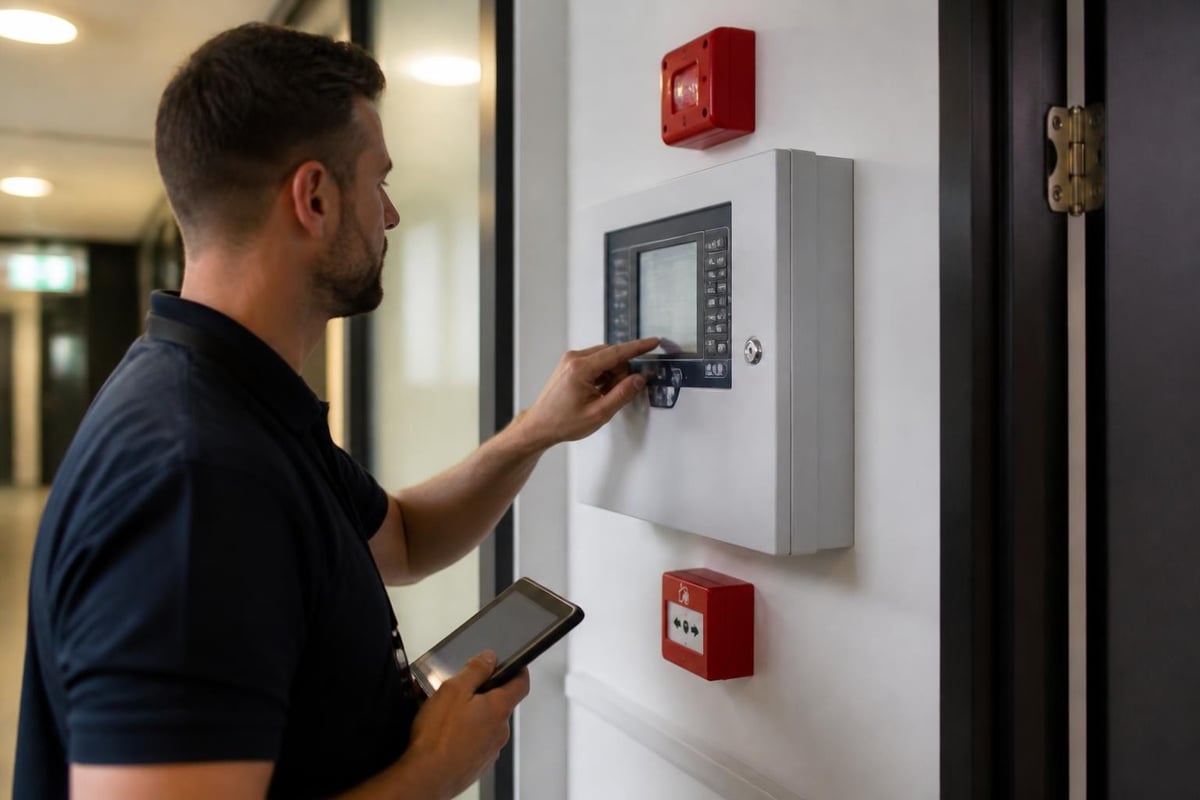
For organisations managing fire alarm servicing alongside other life safety obligations, Fire Alarm Installation and Servicing provides coordinated oversight ensuring category L1-L5 and M systems maintain their design intent through systematic testing and rapid fault resolution. This coordinated approach prevents service fragmentation whilst maintaining specialist expertise across detection technologies.

Cost Structures and Service Level Agreements
Fire alarm servicing costs vary substantially based on system complexity, site accessibility, and service level requirements. Understanding pricing structures enables informed procurement whilst ensuring adequate service quality.
Fixed-price annual contracts provide cost certainty, bundling quarterly and annual servicing visits with unlimited emergency callouts for a predetermined fee. This model suits organisations requiring budget predictability and guaranteed response times.
Time-and-materials arrangements charge for actual work undertaken, offering flexibility for simple systems with reliable performance histories. However, unpredictable costs and potential response delays during emergencies represent significant drawbacks.
Hybrid models combine scheduled maintenance at fixed prices with separate emergency response charges. This approach balances cost control for routine work whilst maintaining rapid fault rectification capability.
Service Level Agreement Components
Comprehensive Service Level Agreements (SLAs) define service quality expectations and provider responsibilities:
| SLA Element | Typical Standard | Critical Premises Enhancement |
|---|---|---|
| Routine visit frequency | Quarterly + annual | Monthly + six-monthly comprehensive |
| Emergency response | 8 working hours | 4 hours maximum |
| Fault rectification | 5 working days | 24-48 hours |
| Parts availability | 10 working days | Next working day |
| Reporting timescale | 10 working days | 48 hours |
| Technician certification | BAFE/NSI individual | BAFE SP203-1 company registration |
SLAs should specify documentation standards, including digital access to service records and automated compliance reporting. Progressive providers offer online portals displaying real-time system status, upcoming service dates, and historical fault trends.
Technology Evolution and Servicing Implications
Modern fire detection technology introduces both opportunities and challenges for servicing regimes. Addressable systems provide device-level diagnostics, enabling predictive maintenance based on actual performance data rather than fixed intervals. Each detector reports its sensitivity, contamination level, and operational status to the central panel, highlighting devices requiring attention before failure occurs.
Wireless systems eliminate cabling inspection requirements but introduce battery management complexity. Each wireless device contains power cells requiring scheduled replacement independent of panel battery maintenance. Service schedules must account for these distributed power sources.
Multi-sensor detectors combining optical, heat, and carbon monoxide detection require comprehensive testing across all sensing elements. Standard smoke testing alone provides incomplete verification, necessitating specialist tools and extended test procedures.
Cloud-Connected Systems
Internet-connected fire alarm panels enable remote monitoring and diagnostics, fundamentally changing servicing dynamics. Engineers can review system health, diagnose faults, and verify test completion without site visits. This capability enables:
- Reduced routine visit frequency through continuous remote monitoring
- Targeted site visits addressing specific diagnosed faults
- Immediate fault notification enabling rapid emergency response
- Automated compliance reporting to responsible persons and authorities
However, cybersecurity considerations emerge. Fire alarm servicing must now encompass firmware updates, network security verification, and data protection compliance. Comprehensive compliance management recognises these evolving technical and regulatory requirements.
Legislative Developments and Future Requirements
The Building Safety Act 2022 introduces enhanced accountability for higher-risk buildings, particularly residential blocks over 18 metres. These provisions establish stringent safety case requirements where fire alarm performance and servicing evidence form critical components.
Accountable persons under the Act must demonstrate not merely that servicing occurs, but that it effectively maintains system capability relative to building-specific fire risks. Generic servicing contracts may prove insufficient without customisation to address unique building characteristics and occupancy vulnerabilities.
The Fire Safety (England) Regulations 2022 mandate regular fire door inspections and evacuation route checks. Whilst distinct from fire alarm servicing, these requirements emphasise integrated safety system maintenance. Forward-thinking organisations coordinate these various inspection regimes, reducing disruption whilst ensuring comprehensive compliance coverage.
Competence Standards
Dame Judith Hackitt's Independent Review of Building Regulations and Fire Safety emphasised competence across the entire building safety lifecycle. For fire alarm servicing, this translates into enhanced scrutiny of service provider qualifications and individual technician capabilities.
Emerging standards may require:
- Formal registration of fire alarm engineers with recognised professional bodies
- Building-specific competence demonstration for complex or high-risk premises
- Enhanced documentation linking servicing activities to building safety case requirements
- Third-party audit of service quality beyond current voluntary schemes
Organisations should anticipate these developments, selecting service providers demonstrating commitment to professional development and quality assurance beyond minimum regulatory compliance.
Procurement Best Practices
Selecting fire alarm servicing providers requires careful evaluation balancing cost, competence, and service quality. Procurement processes should move beyond price comparison to assess capability, responsiveness, and cultural fit.
Specification development begins with understanding current system configuration and performance requirements. Detailed tender documents should include:
- Complete system inventory (panels, devices, interfaces)
- Current servicing frequency and scope
- Building occupation patterns and access restrictions
- Required response times for emergency callouts
- Documentation and reporting expectations
- Relevant British Standards and regulatory frameworks
Inviting potential providers to conduct pre-tender site surveys ensures accurate quotations whilst demonstrating their professionalism and technical understanding.
Evaluation Criteria
Beyond price, assessment should consider:
- Certification and accreditation: BAFE, NSI, or FIA registration
- Geographic coverage: Local engineer availability for rapid response
- References: Demonstrable experience with similar buildings and systems
- Technical capability: Specialist expertise for specific detection technologies
- Digital infrastructure: Online reporting, compliance dashboards, automated alerts
- Financial stability: Assurance of ongoing service delivery and warranty support
Weighted scoring models prevent cost dominating decisions at the expense of service quality or compliance assurance.
Record Retention and Audit Readiness
Fire alarm servicing generates substantial documentation requiring systematic retention and accessibility. The Regulatory Reform (Fire Safety) Order 2005 does not specify retention periods, but practical and legal considerations suggest minimum five-year retention aligned with potential prosecution timescales.
Records should encompass:
- Service visit reports: Detailed findings, test results, remedial actions
- System modifications: Design changes, equipment replacements, zone reconfigurations
- Fault logs: Activation history, false alarm investigations, equipment failures
- Competence evidence: Technician certificates, company registrations, insurance documentation
- Correspondence: Quotes, work authorisations, safety bulletins from manufacturers
Digital record systems offer advantages in accessibility, searchability, and backup resilience. However, paper log books retain value for site-based personnel conducting routine checks and immediate reference during emergencies.
Compliance Reporting
Progressive organisations implement dashboard systems providing real-time compliance status across all properties. These platforms aggregate servicing due dates, outstanding faults, and certification expiry warnings, enabling proactive management rather than reactive crisis response.
For property managers overseeing multiple buildings, such systems prove invaluable. Understanding broader compliance obligations demonstrates the efficiency gains from integrated compliance platforms spanning fire safety, asbestos, water hygiene, and building safety obligations.
Special Considerations for Different Building Types
Fire alarm servicing requirements vary significantly across building typologies, reflecting diverse risks, occupancies, and regulatory frameworks.
Residential buildings (particularly purpose-built flats and houses in multiple occupation) present unique challenges. The Fire Safety Act 2021 extended the Regulatory Reform (Fire Safety) Order to include flat entrance doors and building exteriors, expanding responsible person obligations. Servicing must now consider detection in communal areas, integration with door release mechanisms, and tenant engagement strategies ensuring timely access for testing.
Healthcare premises require enhanced reliability given occupant vulnerability and complexity of evacuation. Servicing schedules often exceed standard BS 5839 minimum frequencies, with monthly comprehensive testing common. Integration with nurse call systems, medical gas shutdown interlocks, and fire-resistant lift controls demands specialist expertise.
Heritage buildings balance fire safety with conservation requirements. Servicing may necessitate specialist wireless systems minimising building fabric disturbance, whilst detection strategies accommodate irreplaceable contents and architectural features. Collaborative approaches to fire safety recognise these competing imperatives, developing solutions preserving both life safety and cultural significance.
Educational establishments face servicing challenges from term-time access restrictions and seasonal closure periods. Annual servicing typically occurs during summer holidays, whilst weekly testing follows academic calendars. Coordination with examination periods prevents disruption whilst maintaining system integrity.
Fire alarm servicing transforms passive detection technology into active life safety protection, but only when delivered with appropriate frequency, competence, and documentation rigour. As regulatory expectations intensify and building safety obligations expand, integrated approaches coordinating fire alarm maintenance with broader compliance requirements deliver efficiency and assurance. Whether managing a single building or a national estate, oxford-ec.co.uk provides comprehensive risk management across fire safety, asbestos, water hygiene, and building safety disciplines, ensuring audit-ready compliance delivered with precision nationwide.