

Managing residential properties in 2026 demands a rigorous understanding of regulatory obligations across multiple disciplines. Apartment compliance has evolved from a simple checklist exercise into a sophisticated risk management framework that touches every aspect of building safety, from structural fire protection to water quality monitoring. Property managers, landlords, and block management companies now navigate an increasingly complex landscape where statutory deadlines, third-party certification requirements, and resident safety expectations converge. The shift from reactive maintenance to proactive compliance management represents not merely a regulatory burden, but a fundamental transformation in how we approach residential building stewardship.
The Regulatory Foundation of Apartment Compliance
The legislative framework governing apartment compliance draws from multiple sources, each addressing specific hazards whilst creating overlapping obligations for duty holders. The Regulatory Reform (Fire Safety) Order 2005 remains foundational for fire safety management, whilst the Control of Asbestos Regulations 2012 establishes duties for asbestos management in residential common areas. The Health and Safety at Work etc. Act 1974 creates overarching responsibilities that extend beyond commercial premises into residential settings where employees work or service is provided.
Recent legislative developments have sharpened the focus on residential compliance considerably. The Building Safety Act 2022 introduced the concept of the Accountable Person for higher-risk buildings, whilst the Social Housing (Regulation) Act 2023 and Awaab's Law have imposed strict timescales for addressing damp and mould concerns. These reforms reflect a broader policy shift towards resident-centric safety management, where property owner responsibilities extend well beyond basic habitability standards.

Understanding Your Duty Holder Status
Determining who holds legal responsibility for apartment compliance depends on building ownership structure, lease arrangements, and management contracts. Freeholders typically bear ultimate responsibility, but right-to-manage companies, managing agents, and leaseholders may assume specific duties depending on their control over relevant premises or systems. The Building Safety Act defines the Accountable Person as whoever has a legal obligation to repair or maintain the structure, exterior, or common parts of a building.
This complexity creates particular challenges in mixed-use developments, where residential and commercial spaces share infrastructure. Water systems, fire alarm panels, and escape routes may serve multiple occupancies, requiring coordinated compliance management across different regulatory regimes. Establishing clear accountability through written management agreements and duty allocation matrices prevents dangerous gaps in oversight whilst protecting against duplicated effort.
Fire Safety Compliance in Apartment Buildings
Fire safety represents perhaps the most comprehensively regulated aspect of apartment compliance, spanning passive protection, active systems, and management processes. The Regulatory Reform (Fire Safety) Order 2005 requires duty holders to conduct suitable and sufficient fire risk assessments, implement appropriate fire safety measures, and maintain emergency procedures. For apartment buildings, this translates into multi-layered obligations covering compartmentation, fire doors, detection systems, emergency lighting, and means of escape.
Fire risk assessments must align with PAS 79-2:2020 for residential buildings, adopting a risk-based approach that considers building construction, occupancy characteristics, and existing fire safety provisions. Type 1 assessments cover common areas only, whilst Type 2, 3, and 4 assessments progressively incorporate flat entrance doors, internal flat arrangements, and destructive investigation of concealed risks. The assessment frequency depends on building risk profile, but annual reviews represent best practice for most apartment blocks.
Compartmentation integrity directly determines whether fire and smoke remain contained during evacuation and firefighting operations. Structural surveys must verify that compartment walls and floors maintain their fire resistance ratings, with particular attention to service penetrations, cavity barriers, and concealed voids. Many older apartment buildings suffer from compromised compartmentation due to retrospective alterations, cable installations, and deteriorated fire-stopping materials.
| Fire Safety Element | Regulatory Standard | Inspection Frequency | Common Deficiencies |
|---|---|---|---|
| Fire Doors (Flats) | BS 9999, Approved Document B | Annual | Missing intumescent strips, failed self-closers, excessive gaps |
| Fire Alarm Systems | BS 5839-1 (Category L1-L5) | Quarterly service, annual certification | Inadequate coverage, disabled sounders, no cause-and-effect testing |
| Emergency Lighting | BS 5266-1 | Monthly function test, annual duration test | Insufficient illumination levels, failed batteries, inadequate signage |
| Compartmentation | Approved Document B, BS 9999 | Triennial (or post-alteration) | Unsealed service penetrations, missing cavity barriers, breached fire walls |
Active fire protection systems require regular testing and maintenance to remain effective. Fire alarm systems demand quarterly servicing by competent engineers, with annual commissioning tests verifying cause-and-effect programming, detector sensitivity, and panel functionality. Emergency lighting requires monthly function tests and annual three-hour duration tests to confirm backup power capacity. Comprehensive fire safety management integrates these testing regimes into a unified compliance calendar, preventing missed deadlines whilst maintaining audit-ready documentation.
Asbestos Management Across Residential Common Areas
The Control of Asbestos Regulations 2012 places duties on those who manage non-domestic premises to identify asbestos-containing materials, assess their condition, and manage associated risks. Whilst individual flats constitute domestic premises exempt from these regulations, apartment building common areas-stairwells, corridors, plant rooms, roof spaces, and external areas-fall squarely within the regulatory scope. This creates a compliance obligation for managing agents, freeholders, and right-to-manage companies responsible for maintaining these spaces.
Apartment compliance in relation to asbestos begins with a comprehensive management survey conducted to HSG 264 standards. These non-intrusive surveys locate and assess accessible asbestos-containing materials during normal occupation, creating a photographic register with material risk scoring and priority recommendations. Textured coatings, floor tiles, pipe lagging, asbestos insulating board ceiling tiles, and roofing materials represent the most commonly encountered asbestos types in residential buildings constructed before 2000.
The asbestos register must remain accessible to contractors, maintenance personnel, and emergency services, with a robust management plan documenting control measures, re-inspection schedules, and emergency procedures. Annual re-inspections monitor the condition of known asbestos-containing materials, updating material scores and triggering remedial action when deterioration occurs. Refurbishment and demolition surveys become necessary before any intrusive works, identifying every material presumed or confirmed to contain asbestos through destructive sampling where required.
Effective asbestos management integrates with broader maintenance planning to prevent accidental disturbance. Permit-to-work systems ensure that contractors receive asbestos awareness briefings before accessing plant rooms or ceiling voids. Managing asbestos risks requires specialist knowledge, particularly when balancing resident safety against the practical challenges of maintaining occupied buildings whilst controlling access to asbestos-containing materials.

Water Hygiene and Legionella Control
The Control of Substances Hazardous to Health Regulations 2002 (COSHH) establish duties to prevent or control exposure to legionella bacteria in water systems. Whilst these regulations apply primarily to work activities, the Health and Safety at Work etc. Act 1974 creates broader duties wherever employees work-including managing agents' staff, contractors, and on-site personnel accessing apartment building water systems. The approved code of practice L8 and British Standard BS 8580-1 provide the technical framework for legionella risk assessments and control measures.
Apartment compliance for water hygiene centres on identifying and controlling conditions that promote legionella growth: water temperatures between 20°C and 45°C, stagnation in little-used outlets, and nutrient sources from scale, rust, or biofilm. Communal hot and cold water systems serving multiple flats present particular challenges, with long pipe runs, infrequently used outlets in vacant flats, and complex distribution networks creating multiple risk points.
Legionella risk assessments must address:
- System schematics identifying storage tanks, calorifiers, pumps, and distribution routes
- Temperature monitoring points and target ranges (cold <20°C, hot >50°C stored, >55°C circulating)
- Dead-leg identification and remediation requirements
- Cleaning and disinfection schedules for tanks and calorifiers
- Sentinel outlet testing programmes and flushing regimes for little-used outlets
- Record-keeping systems demonstrating ongoing monitoring compliance
Monthly temperature monitoring at sentinel outlets provides early warning of control failures, whilst quarterly sampling for legionella, pseudomonas, and total viable counts verifies that control measures remain effective. The written scheme of control documents these procedures, assigns responsibilities, and establishes escalation protocols when monitoring reveals adverse trends. Understanding water hygiene obligations proves essential for duty holders managing complex communal systems across multiple residential units.
Damp, Mould and Indoor Air Quality
Damp and mould compliance has moved from peripheral maintenance concern to central regulatory focus following high-profile cases demonstrating health impacts on vulnerable residents. The Social Housing (Regulation) Act 2023 requires registered providers to investigate damp and mould complaints within specific timescales, whilst Awaab's Law introduces statutory timeframes for hazard assessment and remediation. Although these provisions specifically target social housing providers, the broader duty of care under common law and lease obligations creates similar expectations for private sector landlords.
Mould and damp assessment requires investigating root causes rather than merely treating symptoms. Condensation resulting from inadequate ventilation and heating represents the most common cause in modern apartment buildings, exacerbated by energy-efficient building fabric that reduces natural air exchange. Penetrating damp from building envelope failures and rising damp through defective damp-proof courses require different diagnostic approaches and remediation strategies.
Professional surveys employ moisture meters, thermal imaging cameras, and hygrometers to quantify moisture levels, identify thermal bridges, and assess ventilation adequacy. Laboratory analysis of mould species helps distinguish between surface condensation moulds and those indicating more serious water ingress. The remediation hierarchy addresses underlying causes first-repairing leaks, improving ventilation, enhancing heating capacity-before cosmetic treatments that merely conceal problems.
Preventative Strategies for Indoor Air Quality
Apartment compliance increasingly encompasses proactive indoor air quality management rather than reactive mould treatment. Mechanical ventilation with heat recovery (MVHR) systems provide continuous background ventilation whilst recovering heat energy, but require regular filter changes and duct cleaning to function effectively. Extract ventilation in bathrooms and kitchens must achieve minimum extraction rates specified in Approved Document F, with automatic humidity-controlled fans preventing condensation accumulation during high-moisture activities.
Resident engagement plays a critical role in preventing condensation-related mould growth. Occupant information packs should explain ventilation system operation, appropriate heating patterns, and moisture-generating activities requiring enhanced ventilation. Regular property inspections identify emerging damp issues before they develop into health hazards, whilst also verifying that residents understand and operate ventilation equipment correctly.
Building Safety and Structural Compliance
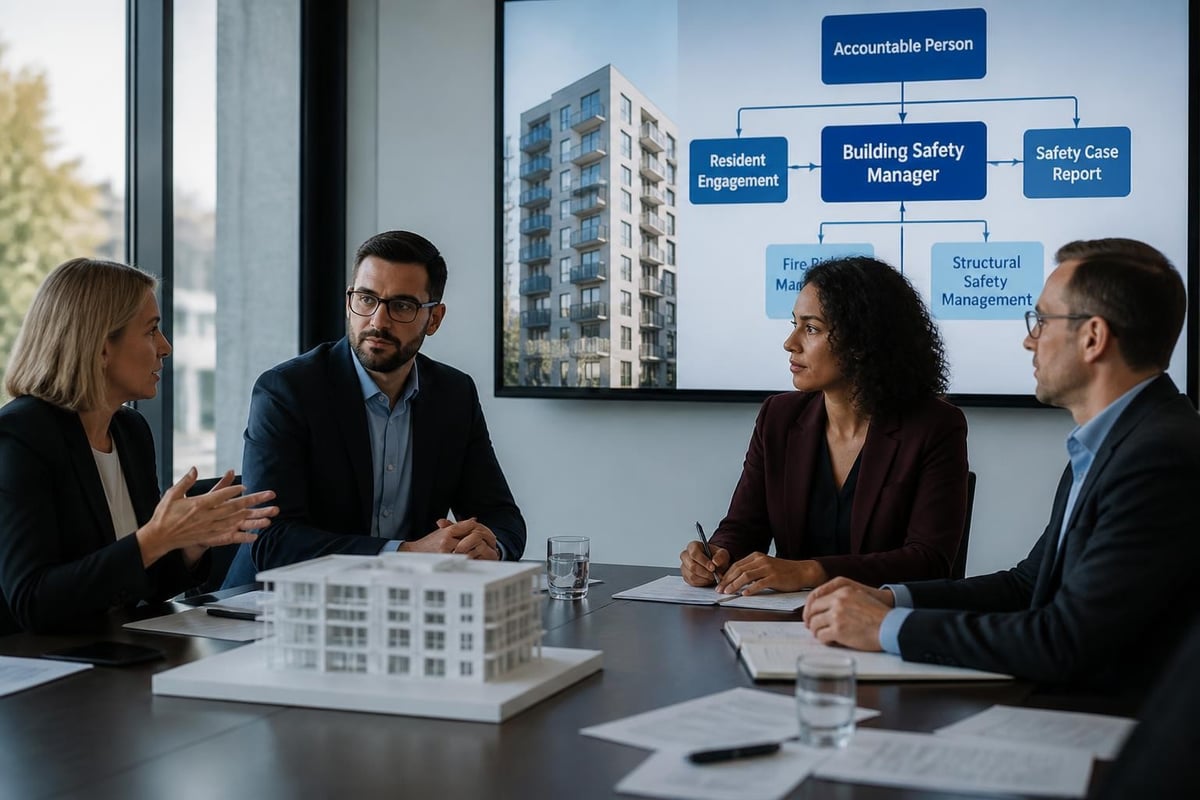
The Building Safety Act 2022 fundamentally reformed the regulatory landscape for higher-risk residential buildings-those exceeding 18 metres in height or containing at least seven storeys. Accountable Persons must register buildings with the Building Safety Regulator, appoint building safety managers, establish resident engagement strategies, and create safety case reports demonstrating that building safety risks are being managed effectively. These requirements sit alongside existing structural safety obligations under the Defective Premises Act 1972 and lease-implied terms for structural repair.
Safety case reports require systematic identification of building safety risks-principally fire and structural failure-with documented control measures and performance monitoring. This risk-based approach extends beyond prescriptive regulatory compliance towards demonstrating that buildings remain safe for occupation through their lifecycle. Regular inspections of structural elements, particularly in older buildings, identify deterioration that might compromise load-bearing capacity or fire resistance.
External wall systems receive particular scrutiny following the Grenfell Tower fire, with combustible cladding remediation programmes continuing across the residential sector. Compartmentation surveys must verify that external wall construction maintains fire resistance requirements, with cavity barriers preventing vertical fire spread through rainscreen voids. Many apartment buildings require retrospective fire engineering assessments to demonstrate adequate safety where original construction predates current standards.
Coordinating Multi-Discipline Compliance Programmes
Effective apartment compliance demands coordination across multiple technical disciplines, each with distinct regulatory frameworks, competency requirements, and testing frequencies. Fragmented procurement-engaging separate specialists for fire safety, asbestos, water hygiene, and building surveys-creates coordination challenges, duplicated site visits, and inconsistent documentation standards. A comprehensive property management compliance checklist helps structure these overlapping obligations into manageable workflows.
Integrated compliance management consolidates technical disciplines under unified governance, creating synergies that improve efficiency whilst reducing costs. Fire risk assessors coordinate with compartmentation surveyors to verify that identified deficiencies are remediated and retested. Asbestos registers inform refurbishment planning, preventing accidental disturbance during upgrade works. Water hygiene monitoring integrates with mechanical and electrical maintenance schedules, ensuring that temperature checks coincide with broader plant servicing.
Benefits of integrated compliance management:
- Single point of accountability for audit-ready documentation
- Coordinated site access reducing disruption to residents
- Consistent competency standards across all disciplines
- Unified digital platforms for certificates, registers, and action tracking
- Strategic remedial planning balancing priorities across risk domains
- Reduced administrative burden through streamlined reporting
Technology platforms increasingly support this integration, with cloud-based compliance management systems consolidating certificates, inspection reports, remedial action trackers, and compliance calendars into searchable databases. Mobile survey applications enable on-site data capture with photographic evidence, geo-tagged defect locations, and automated report generation. These systems create audit trails demonstrating continuous compliance whilst supporting data-driven decision-making about remedial investment priorities.
The Cost of Non-Compliance
Apartment compliance failures carry consequences extending beyond regulatory penalties to encompass civil liability, insurance implications, and reputational damage. Enforcement authorities can issue improvement notices, prohibition notices, and unlimited fines for serious fire safety breaches. The Health and Safety Executive prosecutes asbestos management failures, with penalties reflecting the potential for serious harm rather than actual injuries sustained. Recent case law demonstrates growing judicial willingness to impose custodial sentences for egregious safety management failures.
Civil liability creates potentially greater financial exposure, particularly following incidents causing injury or property damage. Residents injured by defective fire doors, legionella infection, or collapsing structural elements can pursue damages through negligence claims, with legal costs and compensation awards significantly exceeding regulatory fines. The Defective Premises Act 1972 establishes strict liability for landlords failing to maintain structural elements and service installations in good repair, removing the need to prove negligence.
Insurance implications compound these direct costs. Insurers increasingly request evidence of active compliance management before offering coverage, with premium loadings or coverage exclusions applied where documentary evidence proves inadequate. Claims arising from known defects that were not remediated may be rejected entirely, leaving duty holders personally liable for damages. Some local authorities now maintain minimum housing standards with regular inspection programmes that identify non-compliance before it escalates into enforcement action.
| Non-Compliance Consequence | Regulatory Route | Financial Exposure | Timeframe |
|---|---|---|---|
| Improvement Notice | Fire Safety Order | Compliance costs + potential prosecution | 28 days typical |
| Prohibition Notice | Fire Safety Order, HSWA | Building closure, prosecution, unlimited fine | Immediate effect |
| HSE Prosecution (Asbestos) | CAR 2012 | Unlimited fine, up to 2 years imprisonment | 6-12 months investigation |
| Civil Damages Claim | Negligence, Defective Premises Act | Compensation + legal costs (£50k-£500k+) | 2-5 years litigation |
| Insurance Claim Rejection | Policy terms | Full liability for incident costs | Immediate |
Competency and Professional Standards
Apartment compliance work requires demonstrable competency from both duty holders and the specialists they engage. The Building Safety Act establishes a competence framework for building safety managers, whilst individual technical disciplines maintain their own professional standards and accreditation schemes. Fire risk assessors should hold third-party certification to schemes approved under the Fire Industry Association or Institution of Fire Engineers. Asbestos surveyors require BOHS P402/P403 certification depending on survey type, with UKAS-accredited laboratory analysis for sample testing.
Legionella risk assessors typically hold City & Guilds qualifications aligned with the Legionella Control Association's code of conduct, whilst water sampling and analysis must be conducted by UKAS-accredited laboratories using validated methodologies. Building surveyors conducting structural inspections should hold appropriate professional qualifications through RICS, CIOB, or equivalent chartered bodies. This landscape of overlapping competency requirements makes due diligence essential when appointing compliance specialists.
Verification of contractor competency extends beyond checking qualifications to reviewing insurance coverage, safety management systems, and previous project experience. Third-party accreditation schemes provide independent verification of management systems, technical competency, and quality assurance processes. Organisations operating across multiple compliance disciplines should demonstrate competency in each area rather than attempting to extend expertise beyond their qualified scope. Understanding UK compliance legislation helps duty holders identify which competencies are required for specific compliance activities.
Documentation and Audit Readiness
Robust documentation systems distinguish compliant apartment management from organisations merely going through the motions. Every aspect of apartment compliance generates records-risk assessments, inspection reports, test certificates, remedial specifications, contractor competency verification, and maintenance logs. These documents serve multiple purposes: demonstrating regulatory compliance during inspections, supporting insurance claims, defending legal challenges, and informing strategic planning.
Documentation standards should align with recognised frameworks, ensuring that reports contain sufficient detail for independent verification whilst remaining accessible to non-technical stakeholders. Fire risk assessments must identify significant findings, specify responsible persons, set realistic completion timeframes, and prioritise actions by risk severity. Asbestos registers require photographic evidence, precise material locations, condition scores, and risk assessments justifying management decisions. Water hygiene records must demonstrate monthly temperature monitoring, quarterly sampling, annual system reviews, and immediate corrective actions when parameters fall outside specification.
Digital transformation increasingly supports audit readiness through cloud-based platforms that version-control documents, timestamp updates, and maintain complete change histories. These systems enable rapid retrieval during regulatory inspections, with search functionality across multiple document types and projects. Automated compliance calendars generate alerts before inspection deadlines, whilst integration with contractor management systems captures certificates and test results directly from field personnel.
Essential documentation for apartment compliance:
- Current risk assessments for fire, asbestos, legionella, and structural hazards
- Remedial action trackers showing defect identification, priority classification, completion status
- Competency records for all contractors conducting compliance work
- Test certificates for fire alarm systems, emergency lighting, water sampling, fire door inspections
- Resident communication logs documenting safety information provision and engagement
- Incident records capturing near-misses, resident complaints, and corrective actions
- Training records for building staff with safety responsibilities
- Insurance certificates confirming adequate coverage for identified risks
The principle of audit readiness means maintaining documentation to standards that would satisfy regulatory inspection without advance preparation. Many enforcement authorities now conduct unannounced inspections, removing the opportunity to compile missing records retrospectively. Organisations demonstrating systematic compliance management through comprehensive documentation typically receive proportionate enforcement responses focused on improvement rather than punishment.
Resident Communication and Engagement
The Building Safety Act 2022 establishes mandatory resident engagement requirements for higher-risk buildings, but effective communication benefits all apartment buildings regardless of height or regulatory classification. Residents need information about fire safety procedures, planned compliance works, temporary control measures during remediation, and how to report safety concerns. This communication serves both legal compliance and practical safety management, ensuring that occupants understand their role in maintaining building safety.
Resident engagement strategies should include multiple communication channels addressing diverse occupant needs. Written safety information provided at tenancy commencement explains evacuation procedures, fire door protocols, and reporting mechanisms for defects. Regular newsletters update residents about planned compliance works, explaining why disruption is necessary and how long it will last. Digital platforms enable two-way communication, allowing residents to report maintenance issues whilst receiving updates about remedial programmes.
Consultation becomes particularly important when compliance works require access to individual flats. Asbestos removal, fire door replacements, and compartmentation remediation often necessitate entry to private dwellings, requiring careful coordination with occupants. Advanced notice, flexible scheduling, and clear explanation of safety benefits improve cooperation rates whilst demonstrating respect for resident privacy. Where access is refused, documented evidence of repeated attempts protects against allegations of compliance failure due to factors outside the duty holder's control.
Apartment compliance in 2026 demands systematic, multi-discipline risk management that extends well beyond reactive maintenance into proactive safety stewardship. The regulatory landscape continues to evolve, but the fundamental principle remains constant: duty holders must identify hazards, implement appropriate controls, and demonstrate through robust documentation that buildings remain safe for occupation. When fragmented compliance procurement creates coordination challenges and documentation gaps, Oxford EC delivers integrated risk management across asbestos, fire safety, water hygiene, damp and mould, and building safety with audit-ready precision, nationwide.