
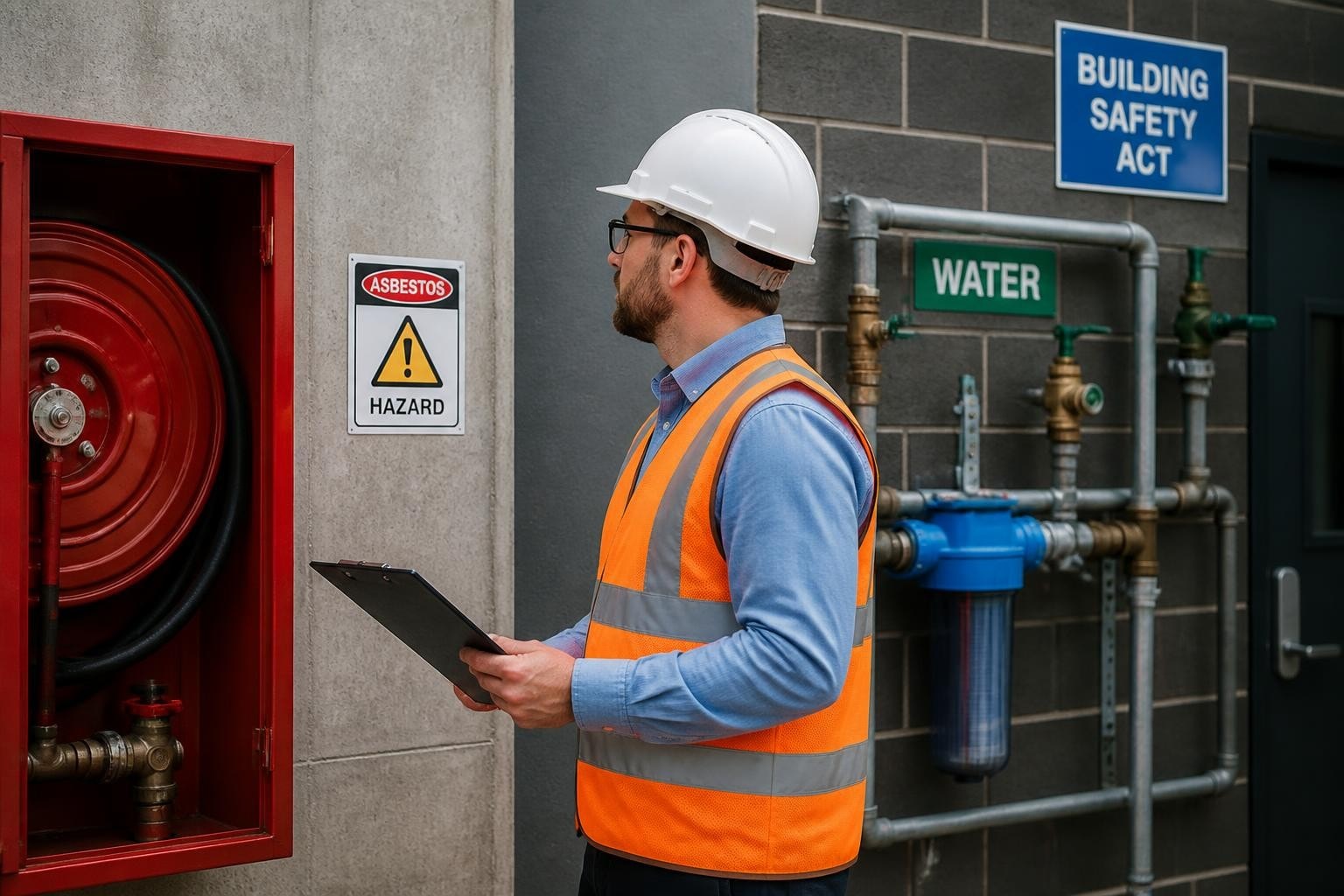
Property management compliance has evolved into a complex, multi-layered discipline that demands constant vigilance and expert coordination. With the regulatory landscape tightening across fire safety, asbestos management, water hygiene, and building safety in 2026, property managers and building owners face unprecedented accountability. The cost of non-compliance extends far beyond financial penalties-it encompasses reputational damage, criminal liability, and in the worst cases, loss of life. Understanding the fundamental requirements and implementing robust systems to maintain ongoing compliance is no longer optional; it's a core business imperative.
The Regulatory Framework Governing Property Management Compliance
Property management compliance in the United Kingdom operates within a complex statutory framework that has expanded significantly following high-profile incidents and subsequent legislative reform. The Building Safety Act 2022, Fire Safety Act 2021, and Social Housing (Regulation) Act 2023 have collectively reshaped the compliance landscape, introducing stringent duties for accountable persons, principal contractors, and managing agents.
Each regulation carries specific requirements, timescales, and documentation standards. The statutory compliance structure ensures ethical practice and accountability across the sector, but it also creates a labyrinth of overlapping obligations that must be navigated with precision.
Key Legislative Drivers in 2026
The current compliance environment is shaped by several critical pieces of legislation:
- Building Safety Act 2022: Introduces the accountable person regime for higher-risk buildings
- Fire Safety (England) Regulations 2022: Mandates specific checks for external walls, front doors, and evacuation equipment
- Control of Asbestos Regulations 2012: Requires duty to manage asbestos in non-domestic premises
- Health and Safety at Work etc. Act 1974: Establishes general duties for safe premises
- Regulatory Reform (Fire Safety) Order 2005: Places responsibility on the responsible person to conduct fire risk assessments
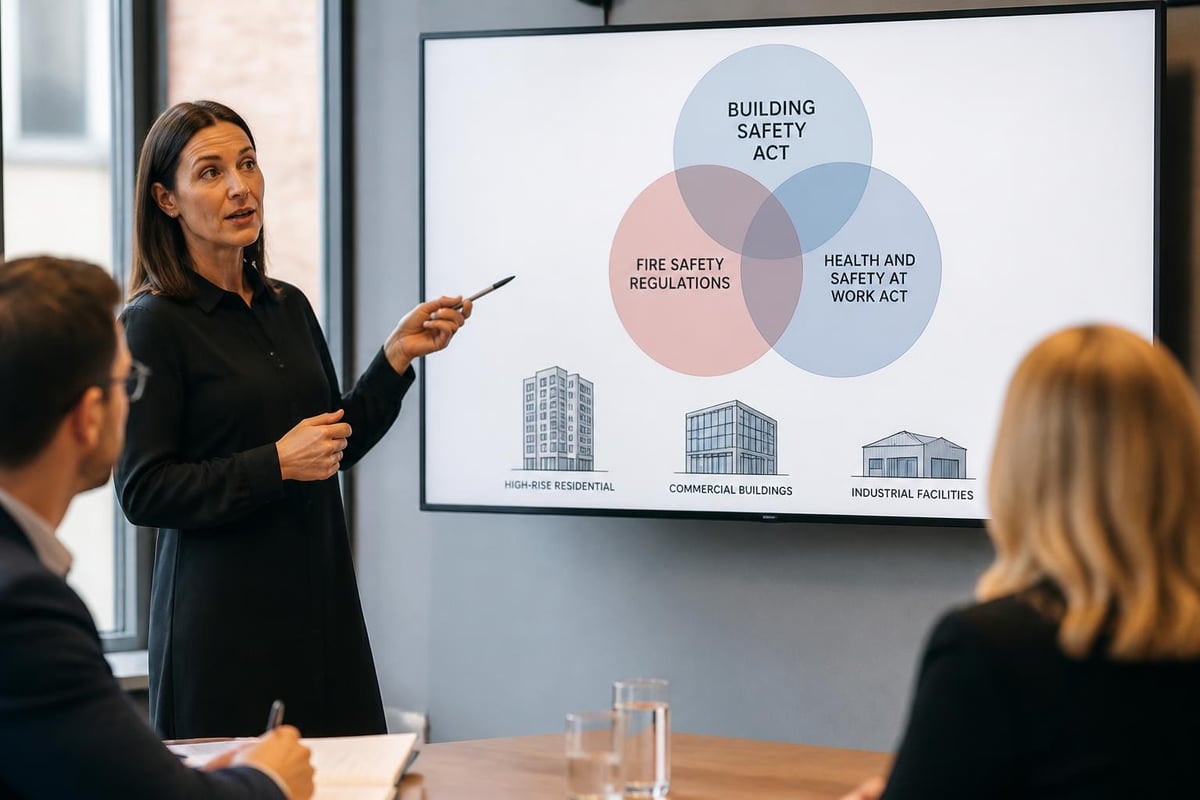
Understanding which regulations apply to your portfolio requires careful assessment of building type, height, use, and occupancy profile. A residential block with commercial ground-floor units, for example, may trigger multiple regulatory regimes simultaneously.
Fire Safety Compliance: The Foundation of Building Safety
Fire safety represents one of the most heavily regulated aspects of property management compliance, with requirements spanning risk assessment, active systems, passive protection, and ongoing maintenance. The responsible person-typically the building owner or managing agent-carries legal accountability for ensuring adequate fire precautions are in place and maintained.
Fire Risk Assessment Requirements
Fire Risk Assessments conducted to PAS 79-1 (non-residential) and PAS 79-2 (residential) standards form the cornerstone of fire safety compliance. These assessments must identify hazards, evaluate risks, and produce prioritised action plans aligned to BS 9997. For residential buildings over 11 metres or seven storeys, additional requirements under the Fire Safety (England) Regulations 2022 mandate annual reviews and specific checks of external wall systems.
The assessment process involves systematic evaluation of ignition sources, fire spread potential, means of escape, fire detection and warning systems, and passive fire protection measures. Each deficiency must be risk-scored and assigned a remedial timeframe, creating an audit trail that demonstrates ongoing management.
| Assessment Type | Standard | Frequency | Building Type |
|---|---|---|---|
| Type 1 (Common Parts) | PAS 79-2 | Annual | Residential |
| Type 2 (Common Parts + Flats) | PAS 79-2 | As required | High-risk residential |
| Type 3 (Destructive) | PAS 79-2 | Pre-refurbishment | All types |
| Type 4 (Evacuation) | PAS 79-2 | Post-incident | High-rise residential |
Oxford Environmental Consultancy delivers Type 1–4 Fire Risk Assessments with fully costed priority action plans, ensuring property managers receive clear, actionable intelligence rather than generic observations. This precision supports evidence-based decision-making and defensible compliance positions.

Active and Passive Fire Protection Systems
Compliance extends beyond documentation to physical systems. Fire alarm installations must meet BS 5839-1 categories L1–L5 or M systems based on building use and risk profile. Emergency lighting requires design verification and annual certification to BS 5266, ensuring adequate illumination along escape routes during power failure.
Passive fire protection-often invisible but critical-demands equal attention. Compartmentation surveys identify breaches in fire-resisting construction, while fire door inspections verify that these critical barriers function as designed. The comprehensive compliance checklist covering fire safety provides valuable guidance on maintaining these interconnected systems.
Asbestos Management: The Duty to Manage
The Control of Asbestos Regulations 2012 impose a clear duty to manage asbestos-containing materials (ACMs) in non-domestic premises and common areas of residential buildings. This duty is absolute-ignorance of asbestos presence does not constitute a defence. Property management compliance therefore requires systematic identification, risk assessment, and ongoing management of all ACMs within your portfolio.
Survey Requirements and Management Plans
Management surveys conducted to HSG 264 standards provide the foundation for asbestos compliance. These non-intrusive surveys locate and assess ACMs during normal occupation, producing photographic registers with material risk scoring and priority assessments. Annual re-inspections monitor the condition of known ACMs against your Asbestos Management Plan, updating material scores and triggering remedial action when deterioration is detected.
Refurbishment and demolition surveys take a more intrusive approach, identifying every material presumed or confirmed to contain asbestos through destructive sampling where required. These surveys are mandated before any structural work commences, protecting contractors and building occupants from inadvertent disturbance.

The asbestos surveying and management services provided by specialists ensure that duty holders receive accurate, defensible documentation that withstands regulatory scrutiny and supports safe building operation.
Water Hygiene and Legionella Control
Water systems in buildings pose significant health risks if not properly managed. The Control of Legionella Bacteria in Water Systems Approved Code of Practice (L8) and BS 8580-1 establish clear requirements for risk assessment, control measures, and ongoing monitoring. Property management compliance in this area requires understanding of both the science of Legionella proliferation and the practical challenges of maintaining distributed water systems.
Legionella Risk Assessment and Written Schemes
A competent person must conduct Legionella risk assessments that identify potential sources of exposure, evaluate risk levels, and establish proportionate control measures. The assessment should include schematic diagrams of water systems, asset registers identifying key components, and a written scheme of control detailing routine tasks, responsibilities, and frequencies.
Key control measures include:
- Temperature monitoring (hot water stored above 60°C, distributed above 50°C, cold water below 20°C)
- Routine flushing of infrequently used outlets
- Quarterly inspection and cleaning of water tanks
- Monthly temperature checks at sentinel outlets
- Annual descaling and disinfection of calorifiers
Sampling and analysis provides verification that control measures are effective. UKAS laboratory analysis for Legionella, Pseudomonas, and total viable counts (TVC) should be conducted at frequencies determined by risk assessment, typically quarterly for higher-risk buildings.
The water hygiene and Legionella management services available from specialists integrate risk assessment, monitoring programmes, and laboratory analysis into a seamless compliance package.
Damp, Mould and Indoor Air Quality
The Housing Health and Safety Rating System (HHSRS) has long identified damp and mould as Category 1 hazards, but regulatory focus intensified following the tragic death of Awaab Ishak in 2020. Awaab's Law, enacted through the Social Housing (Regulation) Act 2023, now imposes strict statutory timescales for investigating and remedying damp and mould complaints in social housing.
Regulatory Requirements Across Tenures
While Awaab's Law applies specifically to social housing, the underlying duties extend across all tenures. For residential landlords, failure to address damp and mould can constitute a criminal offence under the HHSRS. For commercial duty holders, the Workplace (Health, Safety and Welfare) Regulations 1992 require ventilated, healthy workplace conditions free from harmful dampness.
Property management compliance therefore requires systematic inspection, accurate diagnosis of causation (condensation, penetrating damp, rising damp, or combinations), and evidence-based remediation. Superficial treatments that address symptoms without tackling root causes invariably fail, exposing duty holders to repeat complaints and enforcement action.
| Investigation Type | Purpose | Typical Tools | Outcome |
|---|---|---|---|
| Initial Assessment | Categorise severity | Visual inspection, moisture meter | Risk classification |
| Diagnostic Survey | Identify causation | Thermal imaging, hygrometer, air sampling | Remediation specification |
| Post-Remedial Verification | Confirm resolution | Follow-up moisture readings, air quality testing | Sign-off and close-out |
Understanding why property management matters for legal compliance becomes particularly evident in damp and mould cases, where professional expertise in diagnosis and remediation protects both occupant health and landlord liability.
Building Safety and the Golden Thread
For higher-risk buildings-residential buildings over 18 metres or seven storeys-the Building Safety Act 2022 introduces the concept of the "golden thread" of information. This digital record must contain accurate, accessible information about the building's design, construction, and subsequent modifications throughout its lifecycle.
The accountable person for each building must establish and maintain this information, making it available to residents, regulators, and emergency services. Property management compliance in this context extends beyond traditional health and safety documentation to encompass structured data about every building element, system, and change.
Digital Information Management Requirements
The golden thread requires:
- Building information: Architectural and structural design documentation
- Safety information: Fire strategies, risk assessments, evacuation plans
- Change management: Records of all modifications, refurbishments, and repairs
- Maintenance records: Service history for all building safety systems
- Resident engagement: Complaint logs, resident feedback, and safety communications
This information must be stored digitally in formats that ensure accessibility, version control, and long-term preservation. The Building Safety Regulator has indicated that spreadsheets and PDF libraries will not satisfy the requirement-purpose-built building information management systems are expected.
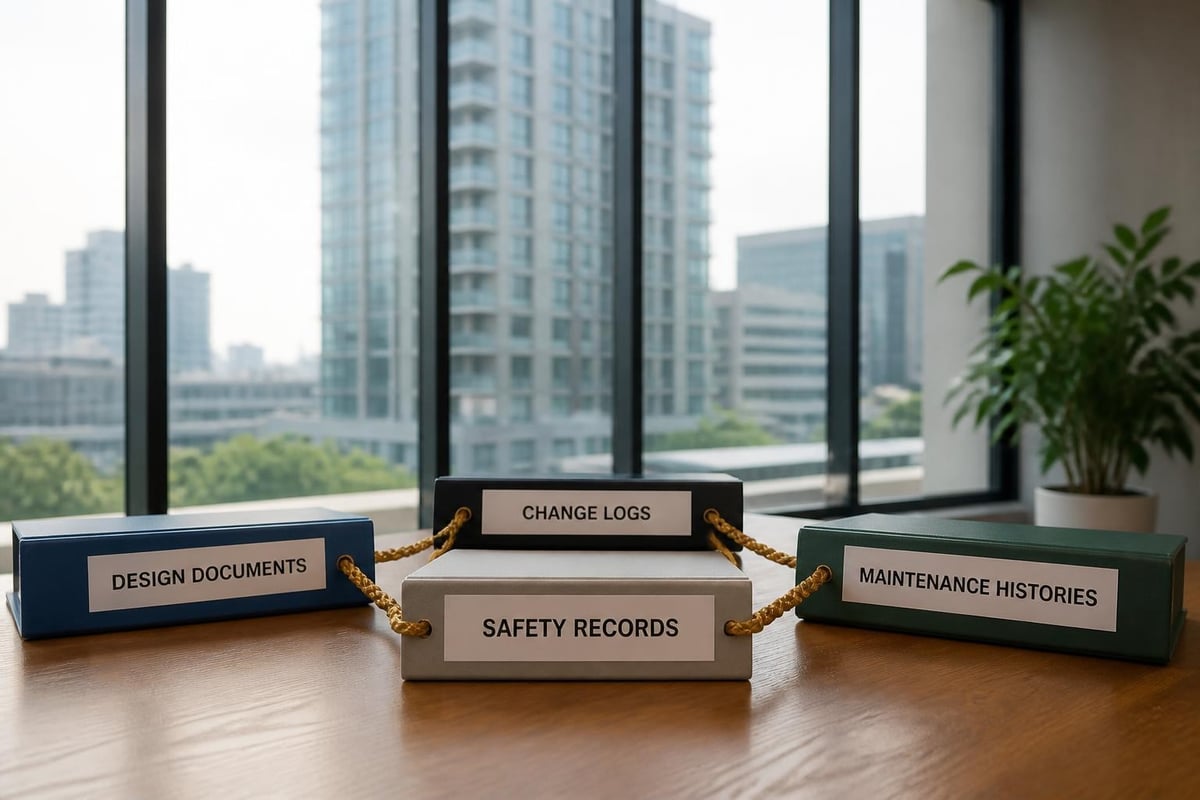
Implementing these systems represents a significant undertaking for property managers with large portfolios. However, the alternative-enforcement action from the Building Safety Regulator-carries far greater cost and reputational damage.
Contractor Management and Supply Chain Compliance
Property management compliance cannot be delegated entirely to third-party contractors, yet effective delivery relies heavily on competent specialist suppliers. The duty holder retains ultimate legal responsibility even when outsourcing technical assessments, maintenance, or remedial works. Understanding contractors' property management systems requirements helps establish appropriate oversight and verification mechanisms.
Selecting Competent Contractors
Competence verification should extend beyond price comparison to encompass:
- Accreditation: UKAS certification for laboratories, third-party certification for fire door installers, asbestos licensing for removal contractors
- Insurance: Appropriate professional indemnity and public liability cover
- Technical expertise: Demonstrable experience in relevant building types and systems
- Quality systems: ISO 9001 certification or equivalent quality management frameworks
- Audit trails: Evidence-based reporting with photographic records and clear recommendations
Due diligence in contractor selection creates defensible procurement decisions. If a contractor's work subsequently proves deficient, the duty holder who can demonstrate robust selection criteria has a stronger position than one who selected based solely on cost.
The multi-discipline risk management services available through integrated consultancies eliminate the complexity of managing multiple specialist contractors, providing single-source accountability with comprehensive technical breadth.
Documentation Standards and Audit Readiness
Regulatory enforcement in 2026 operates on the principle of evidence-based compliance. Verbal assurances carry no weight-enforcers require documented proof that duties have been discharged. Property management compliance therefore demands meticulous record-keeping across every discipline.
Creating Audit-Ready Documentation
Audit-ready documentation exhibits specific characteristics:
- Completeness: No missing reports, no gaps in inspection schedules
- Traceability: Clear version control, dated entries, identified authors
- Accessibility: Organised filing systems that enable rapid retrieval
- Clarity: Unambiguous recommendations with defined responsibilities and deadlines
- Evidence: Photographic records supporting written observations
- Continuity: Demonstrated implementation of previous recommendations
When the Building Safety Regulator, Health and Safety Executive, or local authority enforcement officer requests evidence, the response timeframe is typically measured in days, not weeks. Portfolio managers unable to produce comprehensive documentation face immediate improvement notices and potential prohibition orders.
Digital compliance management systems have emerged as essential tools for maintaining audit readiness across large portfolios. These platforms centralise documentation, trigger automated reminders for scheduled inspections, and generate compliance dashboards that highlight emerging risks before they escalate to enforcement action.
Resident Communication and Transparency Obligations
The Building Safety Act 2022 and subsequent regulations place unprecedented emphasis on resident engagement and transparency. Accountable persons must provide residents with prescribed information about building safety risks, ongoing assessments, and remedial works. This represents a significant cultural shift from historic practice, where building safety information was rarely shared proactively.
Mandatory Information Provision
Residents of higher-risk buildings must receive:
- Building safety information: Name and contact details of accountable person, building height and construction type, fire safety arrangements
- Assessment outcomes: Summary findings from fire risk assessments (excluding commercially sensitive details)
- Remedial programmes: Information about planned works, timescales, and resident impact
- Complaint procedures: Clear routes for raising safety concerns with response timeframes
- Safety instructions: Evacuation strategies, interim measures during works, emergency procedures
This transparency obligation extends beyond one-way information provision to genuine engagement. Resident safety concerns must be logged, investigated, and responded to within specified timeframes. The Building Safety Regulator has enforcement powers specifically addressing failures in resident engagement, independent of actual safety breaches.
Understanding whether property management companies need licensing varies by jurisdiction, but competence and professionalism in resident communication is universally expected.
Enforcement Landscape and Penalty Structures
The consequences of property management compliance failure have escalated dramatically in recent years. Criminal prosecution, unlimited fines, and custodial sentences are now realistic outcomes for serious breaches. The Building Safety Regulator, established in 2023, operates with investigatory and enforcement powers equivalent to the Health and Safety Executive.
Criminal and Civil Penalties
Enforcement action can take multiple forms:
| Enforcement Action | Trigger | Consequence | Appeal Route |
|---|---|---|---|
| Improvement Notice | Identified breach with no immediate risk | Compliance deadline, criminal offence if not met | First-tier Tribunal |
| Prohibition Notice | Serious risk to life | Building closure, criminal offence if contravened | First-tier Tribunal |
| Prosecution | Breach of safety duties | Unlimited fine, up to 2 years custody | Crown Court |
| Special Measures | Systemic failure in social housing | Direct intervention by Regulator | Limited |
Beyond formal enforcement, reputational damage from publicised safety failures can prove commercially devastating. Managing agents lose client instructions, landlords face tenant exodus, and property values can be materially impacted by adverse safety ratings.
The costs of compliance are invariably lower than the costs of non-compliance, yet reactive approaches persist across the sector. Forward-looking duty holders are embedding compliance into business-as-usual operations rather than treating it as an exceptional administrative burden.
Implementing Sustainable Compliance Programmes
Achieving sustainable property management compliance requires systematic approaches that integrate technical assessments, maintenance programmes, contractor management, and digital information systems into cohesive operational frameworks. One-off initiatives deliver temporary compliance; only embedded programmes create lasting resilience.
Building a Compliance Framework
A robust compliance framework incorporates:
- Risk-based prioritisation: Allocating resources according to hazard severity and building vulnerability
- Cyclical inspection programmes: Scheduled assessments that prevent compliance drift
- Remedial tracking systems: Monitoring implementation of recommendations through to closeout
- Competence management: Ensuring internal teams and external contractors maintain current knowledge
- Performance metrics: Quantifiable compliance indicators that support board-level oversight
The most effective programmes consolidate multiple disciplines under unified governance structures. Rather than managing asbestos, fire safety, water hygiene, and building safety as separate workstreams, integrated approaches identify synergies, eliminate duplication, and create comprehensive risk profiles.
Several platforms and systems addressing property management standards have emerged, though selecting appropriate tools requires careful evaluation of scalability, integration capabilities, and long-term support.
Future Regulatory Developments and Emerging Risks
The compliance landscape continues to evolve. Proposed amendments to fire safety guidance, emerging building safety competence frameworks, and potential expansion of the higher-risk building regime to buildings below current thresholds all signal ongoing regulatory development.
Property managers who adopt anticipatory compliance approaches-implementing best practice ahead of mandatory requirements-gain competitive advantage and reduce future adaptation costs. Those who await enforcement before acting face perpetual catch-up and heightened regulatory scrutiny.
Climate change adaptation also presents emerging compliance considerations. Increased rainfall intensity drives damp and mould risks, while overheating in poorly ventilated buildings creates health hazards. Forward-looking compliance programmes are beginning to integrate climate resilience into traditional building safety frameworks.
The regulatory direction is unambiguously towards higher standards, greater transparency, and stronger accountability. Property management compliance in 2026 represents the baseline, not the ceiling, for professional practice.
Property management compliance in 2026 demands technical expertise, systematic processes, and unwavering attention to documentation across asbestos, fire safety, water hygiene, damp and mould, and building safety. Achieving audit-ready precision while managing operational complexity requires specialist knowledge and integrated delivery. Oxford Environmental Consultancy provides one-stop, multi-discipline risk management delivered with the precision and accountability that modern property portfolios demand, ensuring your compliance programme withstands scrutiny and protects your most valuable assets.